connect with us
@phoebesbirding #birdlikeagirl






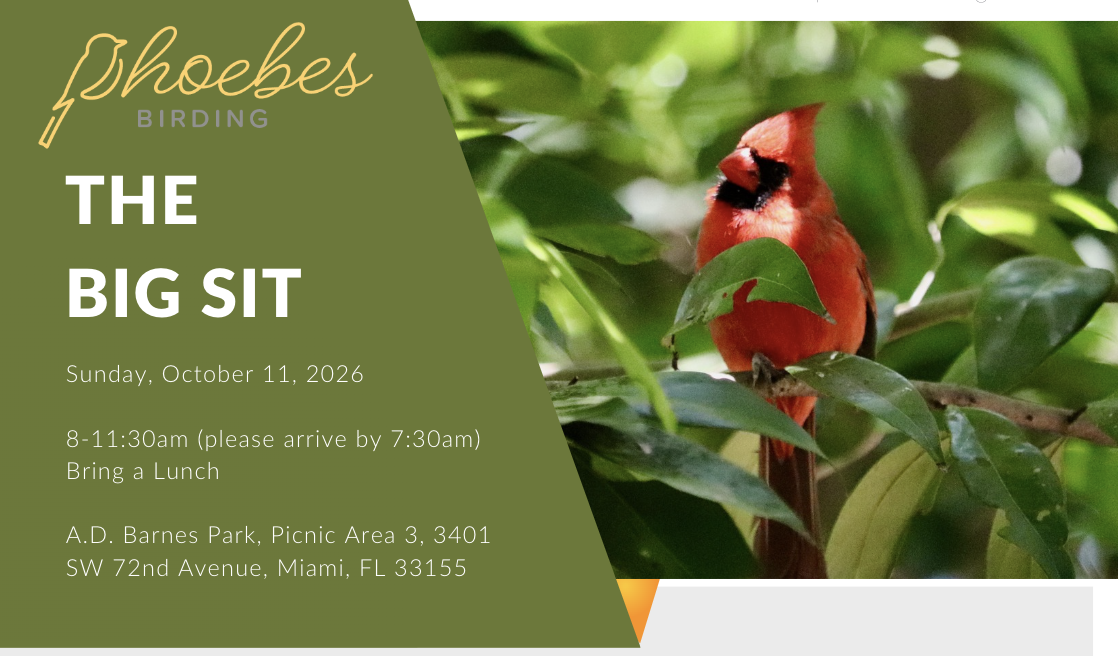
Join the Phoebes at A.D. Barnes Park for a morning of birding as part of the “Big Sit”
The Big Sit is a free, non-competitive event held around the world since its inception in 1992 by the New Haven CT Bird Club. It’s typically held in early October; a great time to catch migrants coming through South Florida! A Big Sit is like a Big Day or a Birdathon in that you’re counting birds, but there’s a catch: all the birds counted must be seen or heard from within the boundaries of a circle no more than 17 feet (5.2 meters) in diameter. Read more about the Big Sit at www.thebigsit.org.
Our 5th annual Big Sit will be at A.D. Barnes Park, a great location for this event. The park is home to many bird species year-round because of its tree canopy, fruiting trees, and water features. In the spring and fall, many migrating birds stop in the park to rest and refuel on their journeys to their breeding grounds (spring) or wintering grounds (fall).
@phoebesbirding #birdlikeagirl
Strike, Spare, Split and Gutter! WHAT?
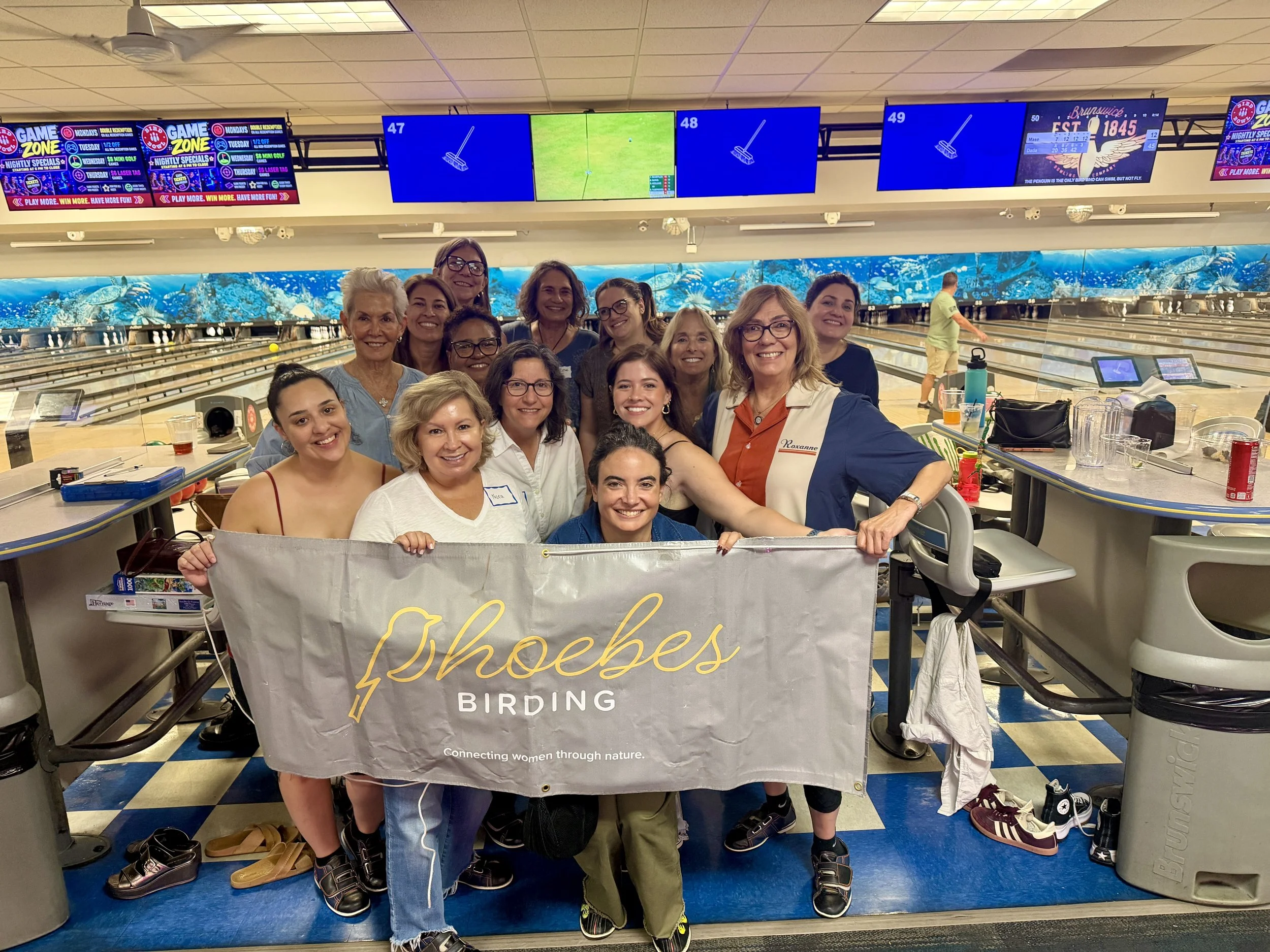
Yes! That’s what the Phoebes did Saturday, August 15th in Miami. As a respite from birding in the summer heat, 14 Phoebes swarmed Bird Bowl for an indoor, air-conditioned afternoon of entertainment, camaraderie, and just plain fun with no pressure or skills required to play.
What made this activity a success, in my opinion, is that none of us are professional bowlers. At times we were loud and rowdy as we attempted to hurl a 7, 8, or 10-pound neon yellow, hot pink, or swirling vivid green globe down a 60-foot oiled bowling lane, hoping to knock down as many pins as possible. Strikes, Spares, Splits and Gutters! We did it all!
It was amusing to watch everyone’s unique, energetic bowling styles. Methods included twerking, shuffling, shimmying, and sliding happy feet, while celebrations were expressed with fist bumps, high-fives, and thumbs-ups, along with joyful cheering and screaming. We flocked and rolled at Bird Bowl! All in all, Phoebes Bowling was a crowd pleaser and the consensus of the group is that we’ll do it again next year!
On a warm March evening, the Phoebes gathered at the historic Doc Thomas House for a cozy Movie Night that felt equal parts bird club and dinner party. By 6 p.m., the tables were filling with a colorful spread of potluck dishes, everything from fresh salads to comfort-food favorites, shared among a wonderful group of nature-loving women.
As the sun set and the popcorn started popping, we settled in for the Hallmark rom-com Adventures in Love and Birding. The film was, quite literally, “for the birds,” a delightfully sappy storyline with just enough romance to keep us smiling. Birders in the room appreciated the mostly accurate identifications sprinkled throughout… though we couldn’t help but collectively groan (and laugh) at a few mistakes, one glaring mix-up: a “spotted owl” that was very clearly a burrowing owl. Points for effort, Hallmark.
Daylight Saving Time began the night before, stealing an hour of sleep, but that didn’t stop twenty dedicated women from gathering bright and early at 8 a.m. in the parking lot of Peaceful Waters Sanctuary in Palm Beach County. Our group represented three counties — Miami-Dade, Broward, and Palm Beach —and we were especially happy to welcome three women who were joining a Phoebes walk for the very first time. It was a beautiful morning with perfect weather, and the spirit of the group was just as bright.
Our first bird of the day was a Loggerhead Shrike perched on a power line in the parking lot. From there we headed onto the boardwalk, and within the first twenty minutes we had already recorded nearly 30 species. The wetlands were lively with herons, egrets, and Common Gallinules moving through the marsh. Through the fence we spotted an American Wigeon on the back retention pond, along with Blue-winged Teal, Mottled Ducks, and a Solitary Sandpiper. The pond was also full of Egyptian Geese families, with fluffy goslings paddling along behind their parents.
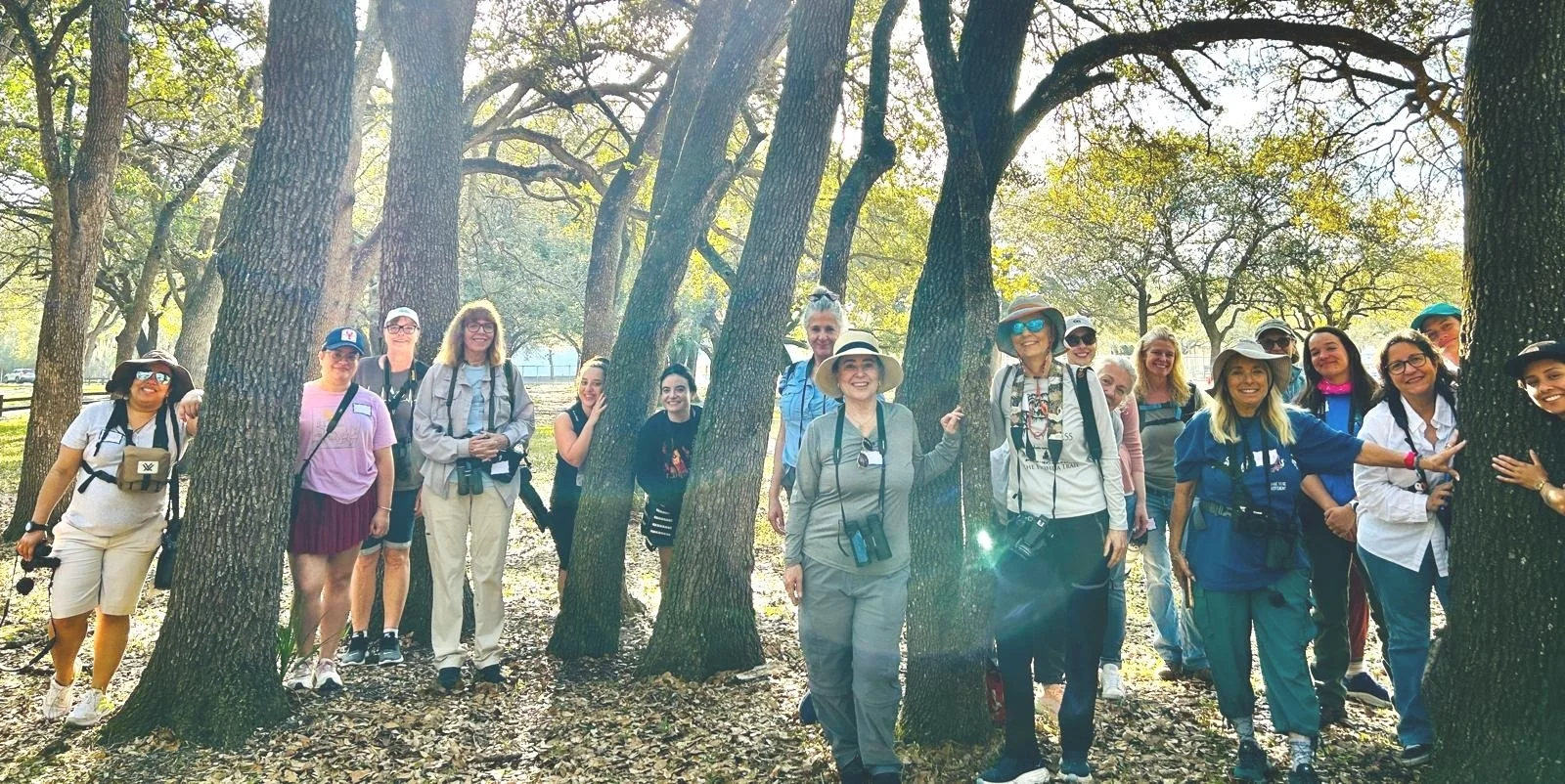
Twenty women joined Phoebes field guide Miriam Avello for a wonderful Saturday morning exploring the shaded trails and hardwood hammocks of Kendall Indian Hammocks Park. This urban oasis once again proved to be an excellent spot for both resident birds and wintering migrants, offering a relaxed but rewarding walk for participants of all experience levels. The cool morning air and dappled light created perfect birding conditions as the group moved slowly along the paths, listening for calls and scanning the canopy.